Blog
5 Brand Monitoring Mistakes That Cost You Customers
9 min readUpdated
Quick takeaways:
- Not monitoring at all is still the most common and costly mistake, even in 2026.
- Broad, unfiltered alerts create noise that kills the habit before it starts.
- Negative mentions ignored on high-authority sites can outrank your homepage for your own brand name.
- Competitor monitoring is the most underused lever in a brand monitoring setup.
- Every mistake here is fixable in under 30 minutes with the right tool and the right filters.
Brand monitoring mistakes are not exotic edge cases. They are the default state for most small teams, agencies, and indie builders who set up alerts once, never revisit them, and wonder why monitoring never seems to pay off.
This article covers the five most common brand monitoring mistakes, the specific cost each one carries, and a concrete fix you can apply today. These are fixable problems. The goal is not to overwhelm you but to get your setup from “technically running” to actually useful. New to the topic? Our brand monitoring guide explains what brand monitoring is and includes a setup checklist.
The Brand Monitoring Mistakes That Quietly Drain Your Reputation
Mistake 1: Not Monitoring at All
The most expensive brand monitoring mistake is not running any monitoring. It sounds obvious, but a significant number of small and mid-size businesses still rely entirely on word of mouth and social media to surface brand mentions. The assumption is that important things will find their way to you.
That assumption has a measurable cost. According to research cited by Moz, a single negative article appearing on the first page of Google search results can cause a business to lose up to 22% of potential customers. If three negative results appear on page one, that number climbs to 59%. Those customers never tell you why they left. They searched for your brand, saw something that put them off, and chose someone else.
A negative review on a high-authority site can rank above your own content for your brand name. A journalist can mention your product in a roundup article without contacting you for comment. A competitor can be favorably compared against you in a post that surfaces every time someone researches your category. None of these require a crisis to happen. They occur during ordinary search behavior, every day.
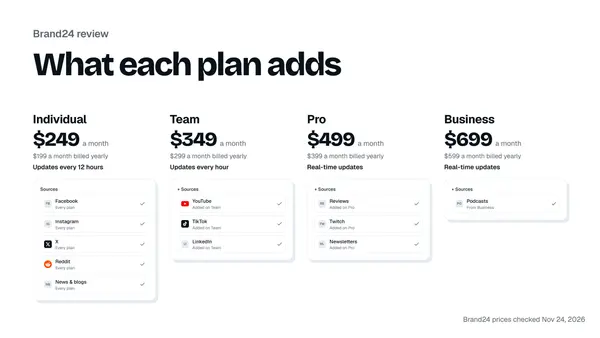
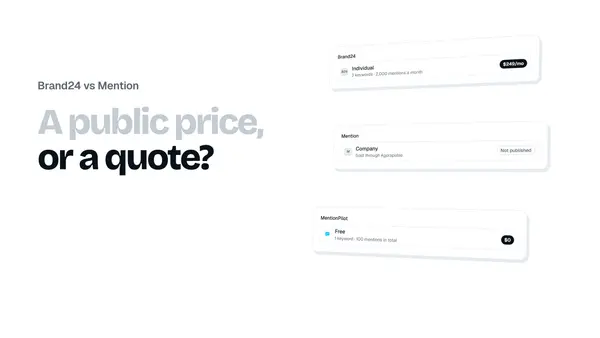
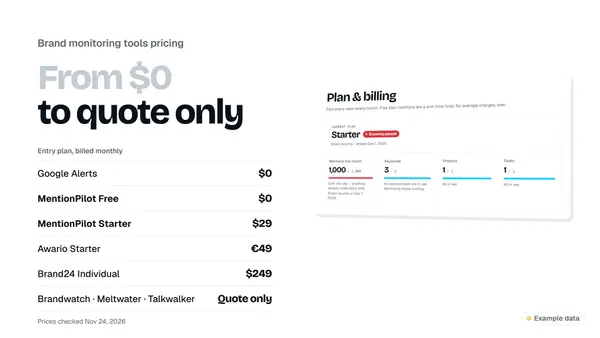
The fix: Set up basic monitoring for your brand name, your key product names, and your founder’s name if they have any public profile. One well-configured keyword is enough to start. MentionPilot’s Free plan costs nothing, requires no credit card, and covers web pages found through Google, Reddit posts and comments, YouTube, TikTok videos that Google has indexed, Bluesky and X, with 100 mentions in total. The first check brings in mentions from the last 48 hours, and after that each source is checked up to every hour. There is no reason to fly blind. If you are weighing paid tools, our brand monitoring tools pricing comparison shows what each one costs, and our Brand24 review explains what Brand24's plans include.
Mistake 2: Using Keywords That Are Too Broad
The opposite extreme from no monitoring is monitoring everything and drowning in noise. This happens most often when someone sets up a one-word alert for a short brand name or a generic industry term.
If your company is called “Summit,” an unfiltered alert for that word returns results about mountain climbing, political conferences, neighborhood associations, and real estate developments. Buried somewhere in that pile, there might be an actual mention of your business. More likely, you stop reading the digest entirely after a week.
This is alert fatigue, and it is why most monitoring setups quietly fail. When your daily digest is full of irrelevant results, you stop trusting it. When you stop trusting it, you stop reading it. At that point, you are paying for a tool you have effectively stopped using, and genuine mentions slip through because you have tuned out.
The fix: Use exact-match or phrase-match queries from the start. Instead of monitoring “Summit,” monitor “Summit Software” or “Summit Analytics.” Layer in exclusion filters to block domains, source types, and keywords that consistently generate noise. In MentionPilot, each keyword can leave out posts that mention words you choose, require words that must also appear, and listen only on the sources you pick, while your own domains keep your own site apart from your mentions. On top of that, AI reads every mention and hides off-topic results and spam, and those never count toward your mention limit. That keeps your digest clean without manual sorting.
Mistake 3: Ignoring Negative Mentions
Negative mentions are uncomfortable, and the natural response is to look away and hope they resolve on their own. Sometimes they do. More often, they compound.
High-authority sites publish content that ranks well. A scathing review on a technology publication, an unresolved complaint thread on a forum with strong domain authority, or a critical comparison article on an established blog can all appear on the first page of Google when someone searches your brand name. Those pages shape first impressions for every prospective customer who does even the most basic research before buying. According to the BrightLocal Local Consumer Review Survey, 97% of consumers read reviews and online content before choosing a business, so they are looking. The question is what they find.
The customers lost to unaddressed negative mentions never show up in your churn data. They simply never converted, so you cannot attribute them to a specific cause in Google Analytics. They were gone before they arrived.
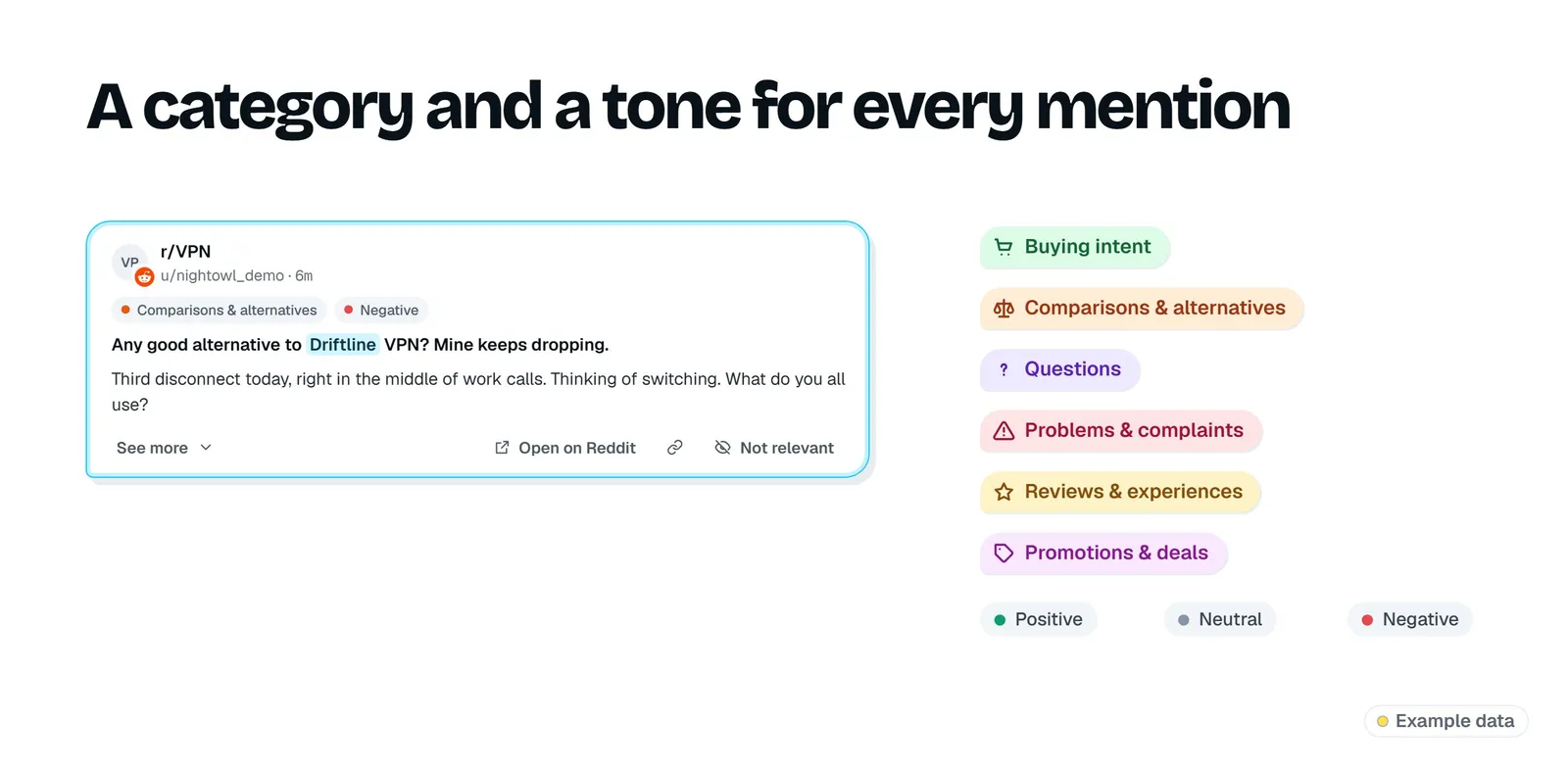
The fix: Treat negative mentions as a triage queue, not an inbox to ignore. Respond on the platform where the mention appeared. For a legitimate complaint, acknowledge it and explain what is being done. For inaccurate information, provide a factual, calm correction. Priority should go to mentions from high-authority sources, since those are the ones most likely to rank for your brand name. MentionPilot tags every mention’s tone and lets you sort the most negative ones to the top, and a notification rule can post negative mentions to Slack as soon as they are found, so you can triage without manually assessing every result.
Mistake 4: Setting It and Forgetting It
This mistake is closely related to the noise problem, but it is specifically about maintenance over time. Even a well-configured monitoring setup degrades. New spam domains emerge. Your brand gets mentioned in unrelated contexts you did not anticipate. The web changes, and filters that worked in January may be generating noise by July.
The pattern is consistent: someone sets up monitoring carefully at launch, then never revisits the filters. Six months later, the digest has drifted. Irrelevant results have crept back in. The signal-to-noise ratio has fallen far enough that the user has stopped paying close attention. A mention that would have prompted a quick response in month one now gets missed entirely in month six.
This is not a tool failure. It is a workflow failure. Monitoring is not a one-time configuration task; it is a lightweight ongoing practice. The ongoing part does not take much time, but it does require some time.
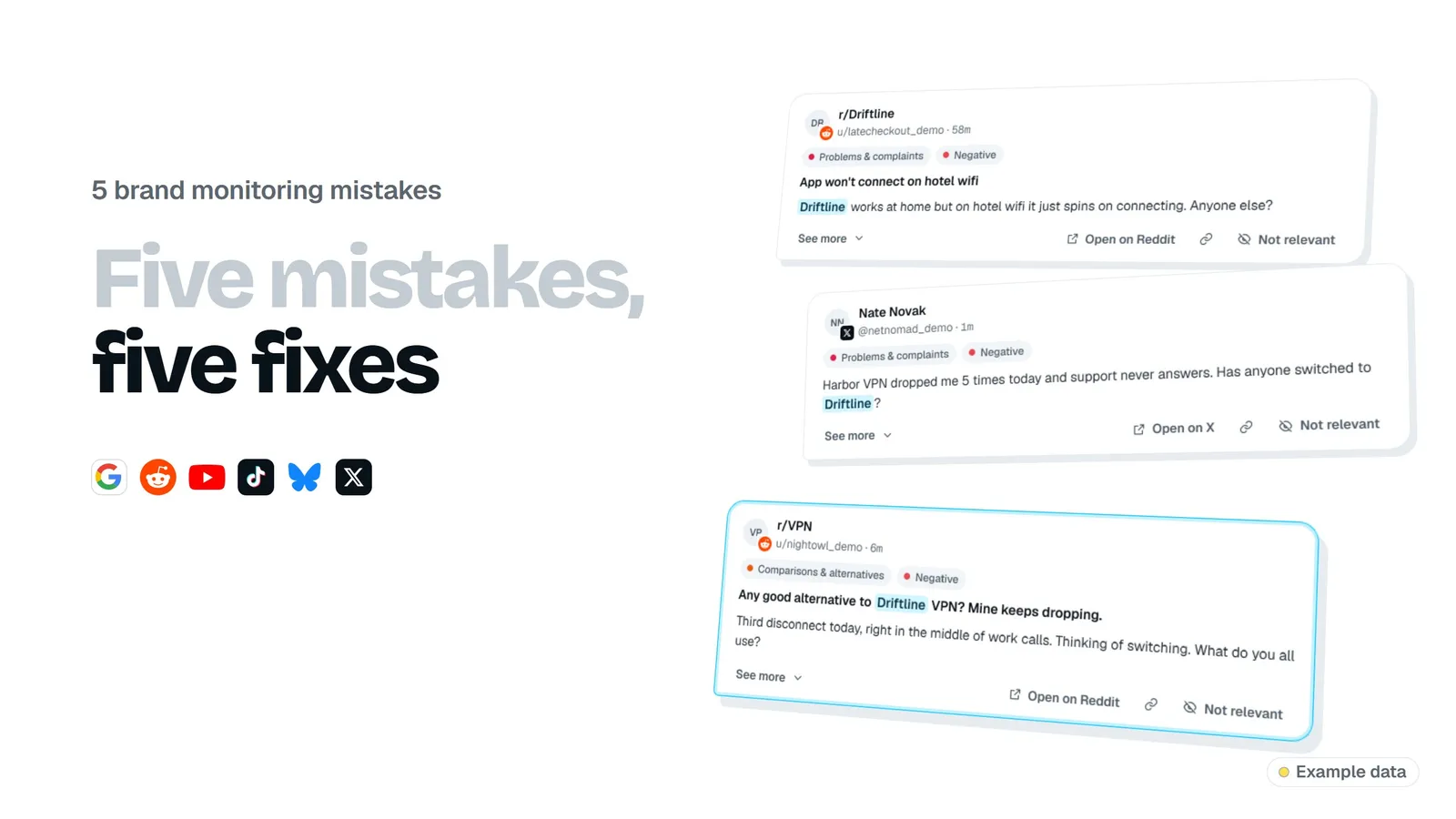
The fix: Schedule five minutes once a month to review your recent digest results. When you spot a domain that consistently generates irrelevant mentions, add it to your exclusion list. When a new keyword pattern appears that does not belong, block it. In MentionPilot, adding a word to a keyword’s leave-out list takes about 30 seconds, and a mention that slipped through can be marked as not relevant with one click. The goal is not a perfect setup from day one; it is a setup that improves incrementally with minimal effort.
Mistake 5: Monitoring Your Brand but Not Your Competitors
Most brand monitoring setups track only the company’s own name. That is a reasonable starting point, but it leaves significant intelligence on the table.
Competitor monitoring tells you things that are genuinely hard to learn any other way. Which publications cover your competitors regularly? What do their customers complain about in forums and review threads? Which product features generate the most positive coverage? Are there comparison articles that mention both your brand and a competitor, and if so, how does that coverage frame the choice? Comparison content is especially high-value because it directly influences purchase decisions. Someone reading a “Brand A vs. Brand B” article has already decided they want a solution in your category. The only question is which one.
Making strategic decisions without this context means investing in features your competitors already dominate, or ignoring weaknesses in their products that their customers are vocally unhappy about. Those are gaps you could solve and publicize.
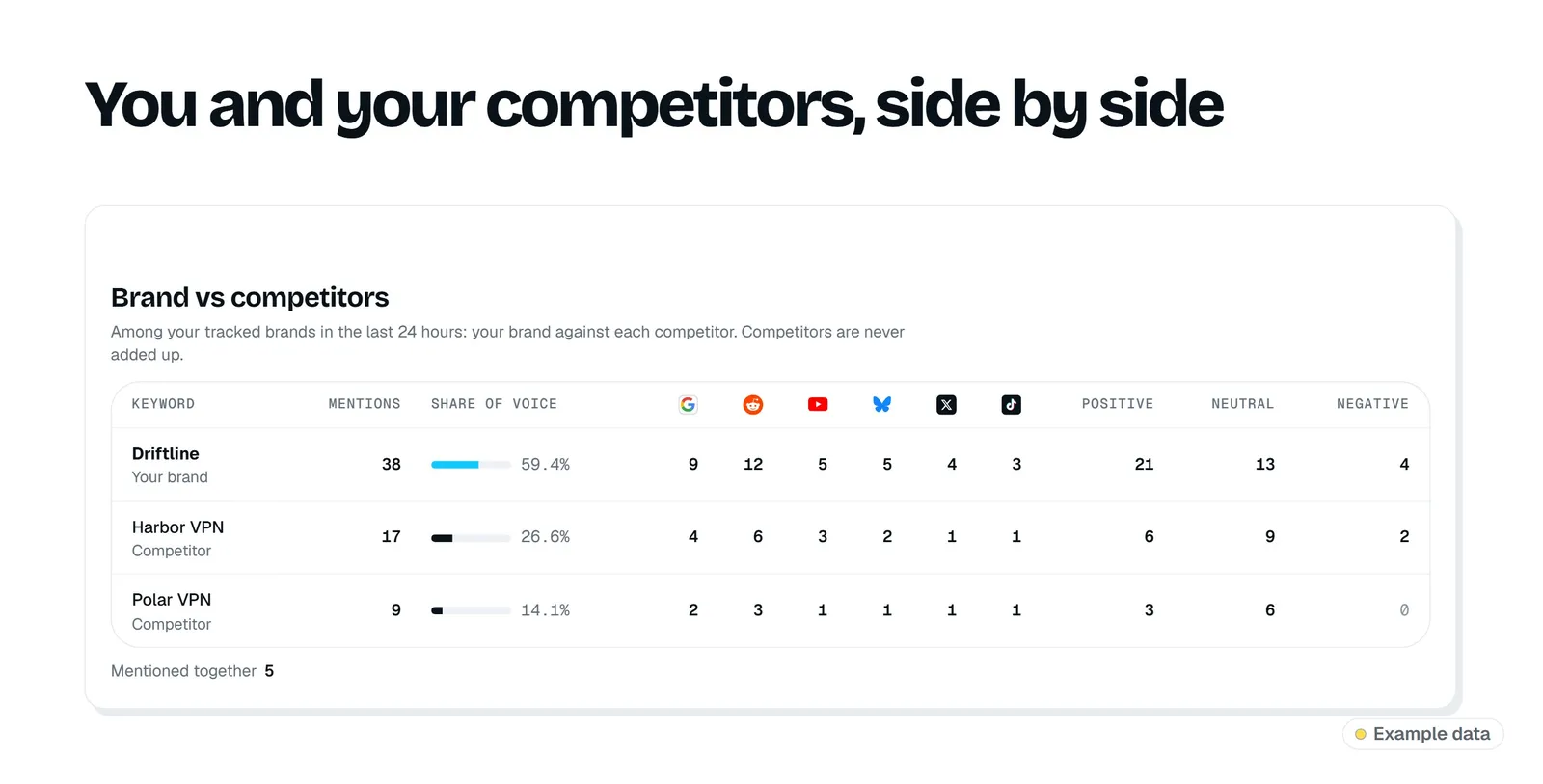
The fix: Add alerts for your top two or three competitors. Track their brand names and their primary product names. Pay specific attention to any coverage that mentions both you and a competitor in the same piece. On MentionPilot, competitor names go in their own Competitors group, separate from your My brand keywords, and mentions that name you and a competitor together are flagged as head-to-head, so the comparison coverage is easy to find.
The Common Thread Across All Five Mistakes
Every mistake on this list shares the same root: treating brand monitoring as a task to complete rather than a practice to maintain. The mental model of “set it up, check the box, move on” is what causes each of these failures, whether it is no monitoring at all, misconfigured monitoring that produces noise, or correctly configured monitoring that was never maintained.
The good news is that the ongoing maintenance requirement is genuinely light: five minutes of filter review per month, a quick scan of the daily digest each morning, and a brief look at mention trends when you prepare a monthly report. That is the full workload.
The brands that get consistent value from monitoring built it into their routine rather than treating it as a special project. They catch negative mentions while there is still time to respond effectively, spot coverage opportunities before the news cycle moves on, and make product decisions with real market signal instead of gut instinct.
If any of these mistakes describe your current setup, the fix is not complicated. Start with one keyword, filtered properly, reviewed daily. You can expand from there, because the mentions are happening whether you are watching or not. Start with the Free plan on MentionPilot and see what you have been missing.
FAQ: Brand Monitoring Mistakes
Q: What is the single most damaging brand monitoring mistake for a small business?
Not monitoring at all is the most costly mistake because the damage accumulates silently. Negative content can rank for your brand name for months before you discover it organically, and every prospective customer who searches in the meantime is making decisions based on that content.
Q: How often should I review and update my brand monitoring filters?
Once a month is enough for most setups. A quick five-minute review of recent digest results to catch new noise sources and add exclusions is sufficient to keep your signal clean without turning maintenance into a project.
Q: Can broad keywords really make brand monitoring useless?
They can, because the result is alert fatigue. When your digest is consistently full of irrelevant results, you stop reading it, which effectively disables your monitoring entirely. Exact-match or phrase-match queries combined with domain and keyword exclusions solve this almost completely.
Q: Why should I monitor competitors, not just my own brand?
Competitor monitoring surfaces market intelligence you cannot get any other way: which outlets cover your category, what problems their customers are vocal about, and which comparison articles are actively shaping purchase decisions in your space. It also gives you early warning when a competitor starts gaining momentum in channels you are not watching.
Q: Is it worth responding to every negative mention, or only the ones on big sites?
Prioritize by authority. Negative mentions on high-authority sites are the ones most likely to appear in search results for your brand name and therefore carry the highest risk. Low-authority mentions on obscure forums may not need a response at all. Checking how prominent each source is before you respond is the practical way to focus your time.